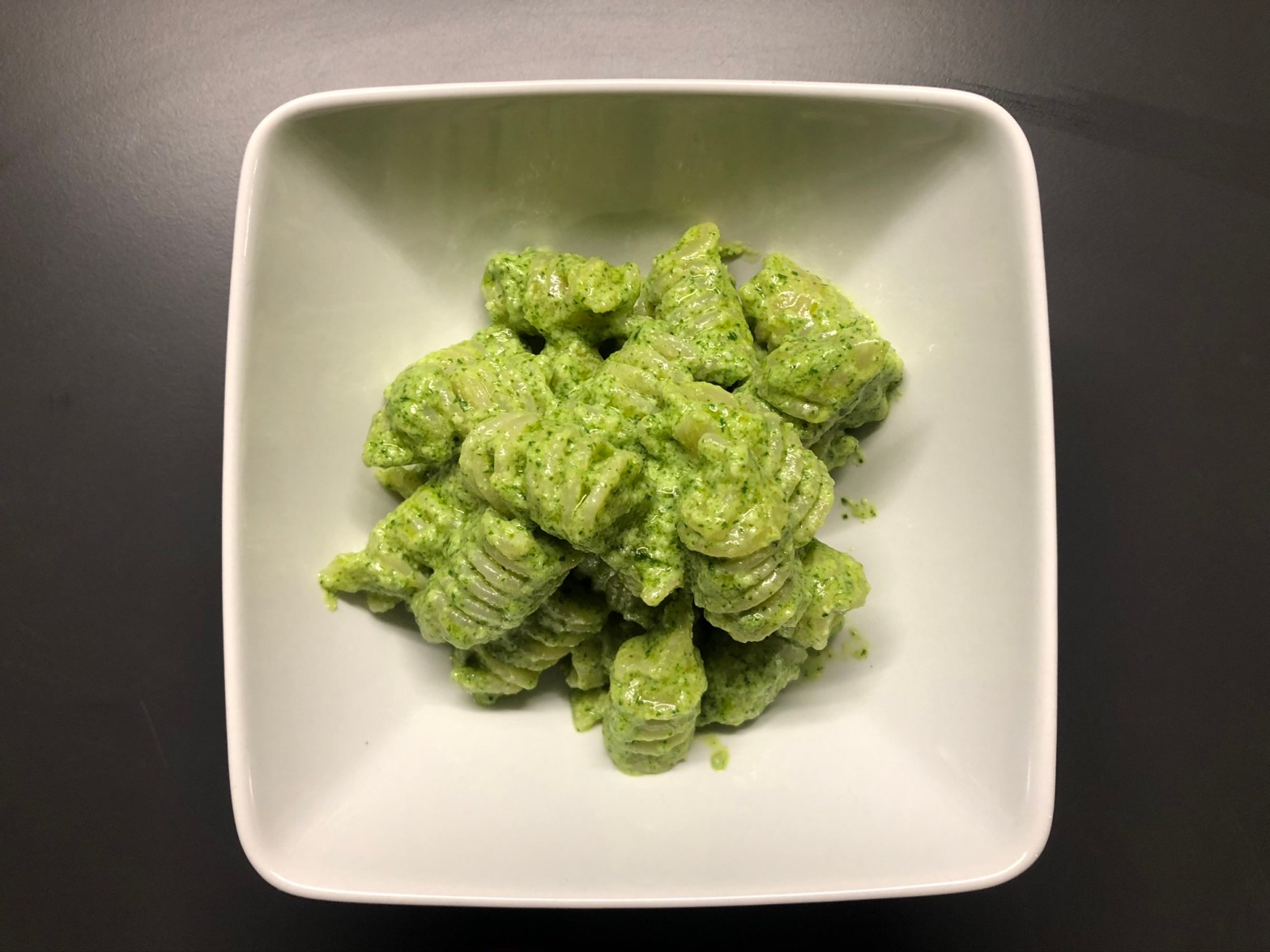
(German version below)
This morning I had breakfast with a friend first and then did some shopping for next week. In Italy it is common for most shops to be open on Sundays. By the time I got home, it was a little later and I wanted to cook something that was, well, fast and easy.
The really simplest that is there is pesto alla genovese.
The traditional pesto was first documented in the mid-19th century in the Liguria region. But it is still much older and goes back – probably – to a herbal sauce from the time of the Romans. It is a very good example that it does not need many ingredients to create an indescribable taste.
The original uses only fresh basil, olive oil, garlic, Parmigiano and Pecorino. If necessary, some salt and I usually even leave the salt away, depending on how much ripened the Pecorino is that I use.
So, the list of ingredients is very manageable:
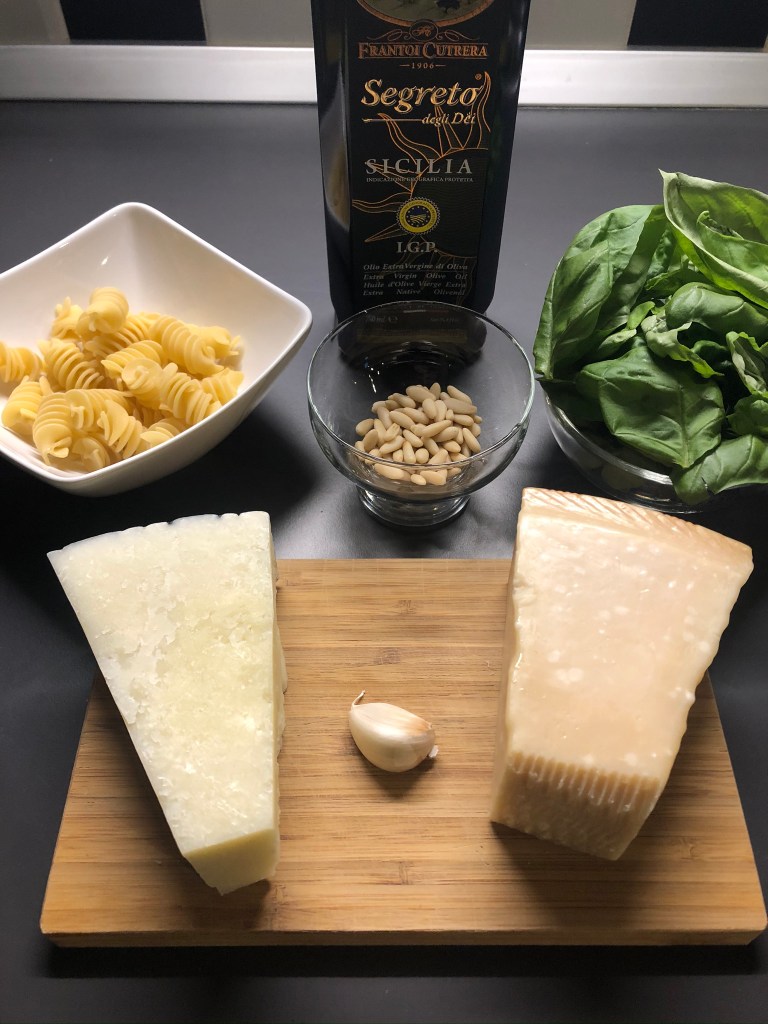
- 1 bunch of fresh basil
- 100 ml olive oil (good quality)
- 20 g pine nuts
- 1 clove of garlic
- 20 g Parmigiano
- 20 g Pecorino
The cheese should be ripened and hard. Of course, this is always true in principle, but here in particular: the olive oil must be of very good quality and the basil must be very fresh. A good olive oil can actually be easily tested. It must not be too oily on the fingers. Even if it is called an oil, rubbing it between two fingers should feel like water rather than oil. If you smell it it should have an intense smell of fresh grass. If you taste it and swallowed it should have on the palate a slight hot taste similar to pepper.
The preparation itself is then actually quite simple.
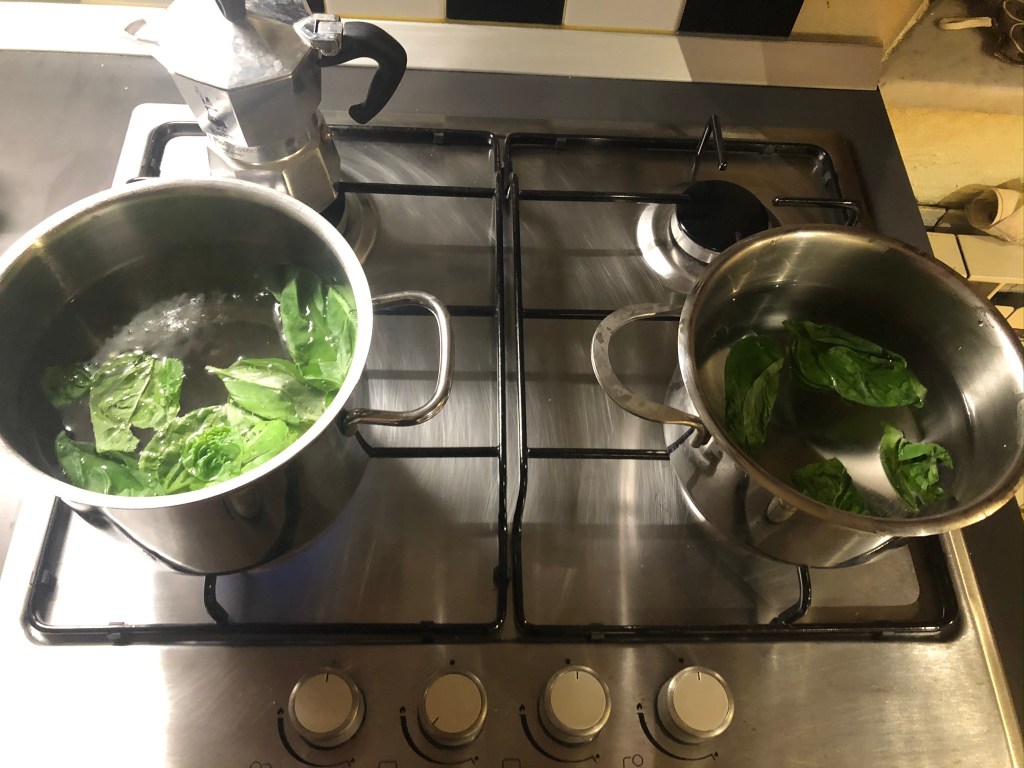
I first dipped the basil leaves in a pot of boiling and salted water and then quenched in ice water.
Then I rubbed the Parmigiano and Pecorino and then put all the ingredients together in a beaker and mashed well with the hand blender.
If you want – some people swear by it – you can also crush all the ingredients in a mortar. To be honest, that would have taken me too long and I have no mortar. If you want to do that, you should not put all the basil all at once in the mortar, but gradually. It is claimed that by slowly pounding in a mortar, the taste of basil is even better.
At the same time I cooked the pasta al dente and then took two or three spoons of the water of the pasta to stretch the pesto and stir it smoothly. Due to the starch in the water that the pasta has given off, this results in a very creamy pesto. That’s why I usually leave the salt on the pesto itself, since enough salt is already contained in the cooking water.
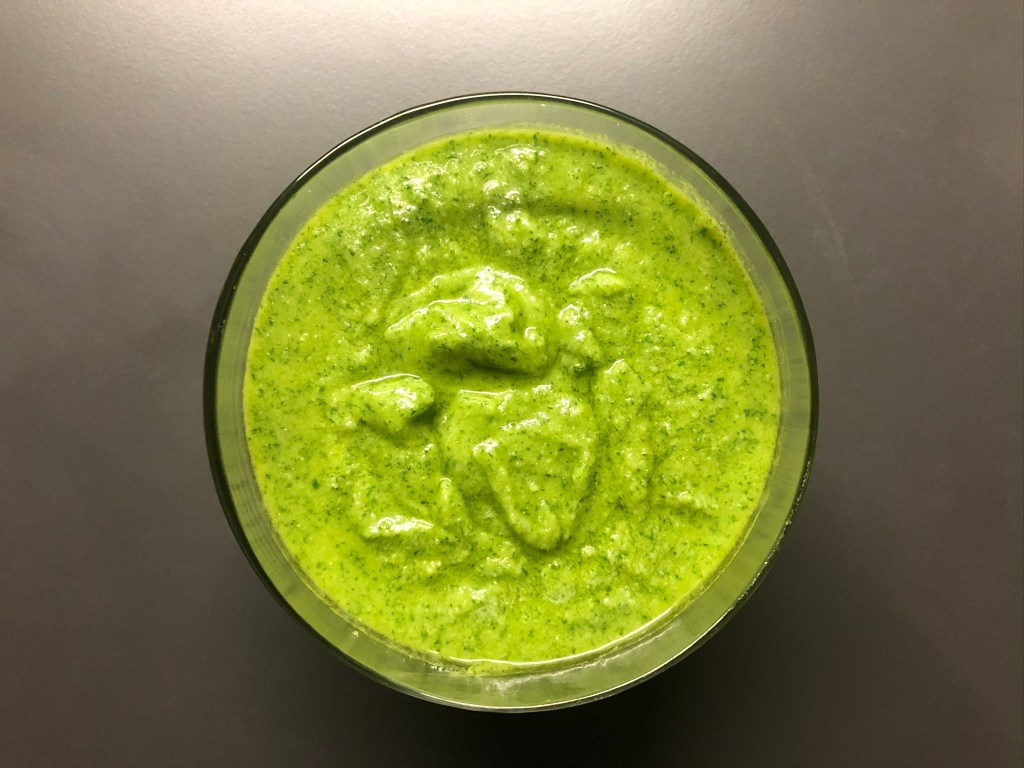
The best of pesto alla genovese is that it is really fast, but the taste is indescribably delicious as well. It just tastes great fresh after basil and olive oil and is really nothing compared to what you can find in a supermarket shelf. I could actually eat it everyday but I have a few other recipes on my to-cook list.
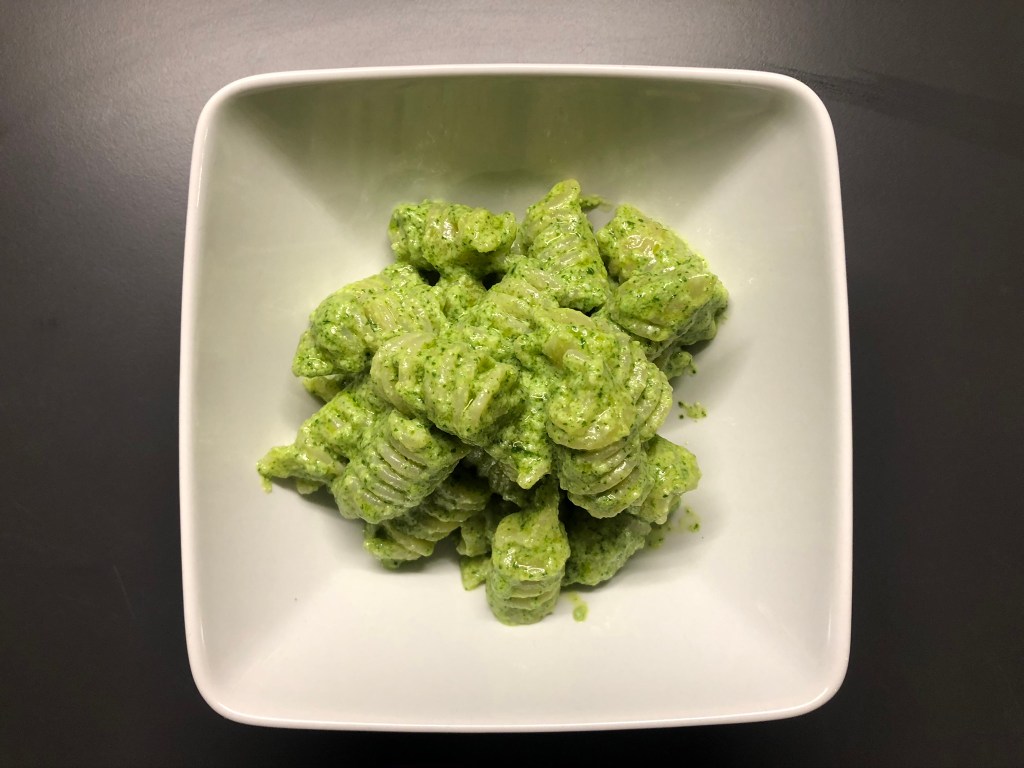
Pesto alla genovese
Heute Morgen war ich erstmal mit einem Freund frühstücken und habe danach ein paar Einkäufe für nächste Woche erledigt. In Italien ist es üblich, dass die meisten Geschäfte sonntags geöffnet sind.
Bis ich dann wieder zu Hause war, war es schon etwas später und ich wollte etwas Kochen das, naja, schnell und einfach ist.
Das wirklich so ziemlich einfachste das es gibt ist Pesto alla genovese.
Das traditionelle Pesto wurde erstmals Mitte des 19. Jahrhunderts in der Region Ligurien dokumentiert. Es ist aber noch viel älter und geht – wahrscheinlich – auf eine Kräutersoße aus der Zeit der Römer zurück.
Es ist ein sehr gutes Beispiel, dass es nicht vieler Zutaten benötigt um einen Unbeschreiblichen Geschmack zu erzeugen. Im Original wird lediglich frischer Basilikum, Olivenöl, Knoblauch, Parmigiano und Pecorino verwendet. Bei bedarf noch etwas Salz wobei ich selbst den Salz meistens weg lasse, je nachdem wie sehr gereift der Pecorino ist den ich verwende.
Die Zutatenliste ist sehr überschaubar:

- 1 Bund frischer Basilikum
- 1 Knoblauchzehe
- 100 ml Olivenöl von guter Qualität
- 20 g Pinienkerne
- 20 g Parmigiano
- 20 g Pecorino
Der Käse sollte gereift also hart sein. Prinzipiell gilt das natürlich immer, aber hier ganz besonders: das Olivenöl muss von sehr guter Qualität sein und der Basilikum muss sehr frisch sein. Ein gutes Olivenöl kann man eigentlich ganz einfach erkennen. Es darf an den Fingern nicht zu ölig sein. Auch wenn es Olivenöl heißt sollte es sich beim Reiben zwischen zwei Fingern eher wie Wasser anfühlen als wie Öl. Wenn man daran riecht sollte es einen intensiven Geruch nach frischem Gras haben. Wenn man es kostet und herunterschluckt sollte es am Gaumen eine leichte Schärfe ähnlich zu Pfeffer aufweisen.
Die Zubereitung selbst ist dann eigentlich ganz einfach.
Ich habe zuerst die Basilikumblätter in einem Topf mit kochendem und gesalzenem Wasser getaucht und danach in Eiswasser abgeschreckt.
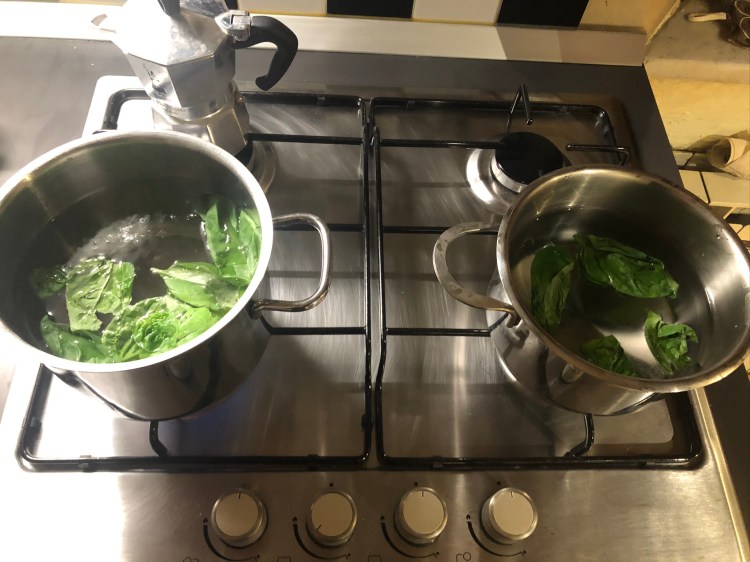
Danach habe ich den Parmigiano und den Pecorino gerieben und dann alle Zutaten zusammen in einen Becher getan und mit dem Stabmixer gut püriert.
Wenn man will – machen Leute schwören darauf – kann man auch alle Zutaten in einem Mörser zerstoßen. Um ehrlich zu sein, das hätte mir zu lange gedauert und ich habe auch keinen Mörser. Wenn man das tun will, sollte man nicht den ganzen Basilikum auf einmal in den Mörser tun, sondern nach und nach. Es wird behauptet, dass durch das langsame Zerstoßen in einem Mörser der Geschmack des Basilikums noch besser zur Geltung kommt.
Parallel dazu habe ich die Pasta al dente gekocht und dann zwei, drei Löffel von dem Wasser der Pasta genommen um des Pesto etwas strecken und glatt zu rühren. Durch die Stärke im Wasser, dass die Pasta abgegeben hat entsteht dann ein sehr cremiges Pesto. Darum lasse ich den Salz am Pesto selbst auch meist weg, da im Kochwasser schon genug Salz enthalten ist.
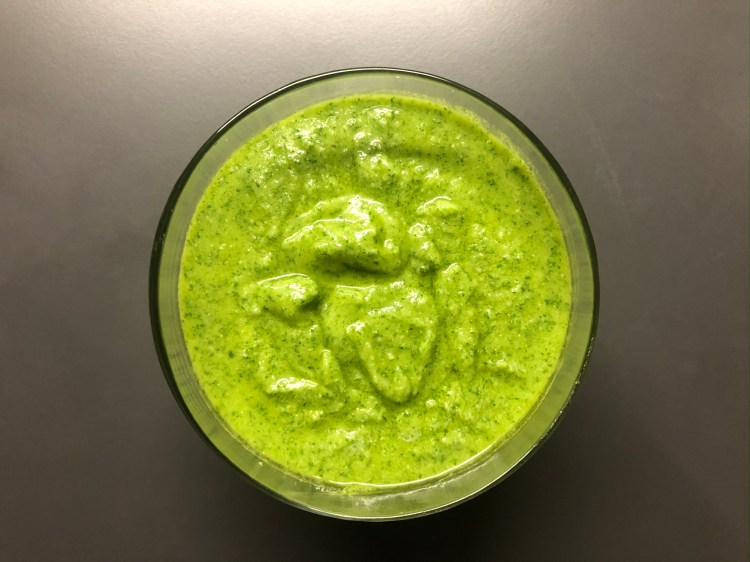
Das Schöne an pesto alla genovese ist, dass es wirklich sehr schnell geht, der Geschmack aber unbeschreiblich lecker ist. Es schmeckt einfach super frisch nach Basilikum und Olivenöl und ist wirklich mit nichts zu vergleichen was man in einem Supermarktregal finden kann. Ich könnte es eigentlich jeden Tag essen aber ich habe noch ein paar andere Rezepte auf meiner To-Cook-Liste stehen.


One thought on “Pesto alla Genovese”