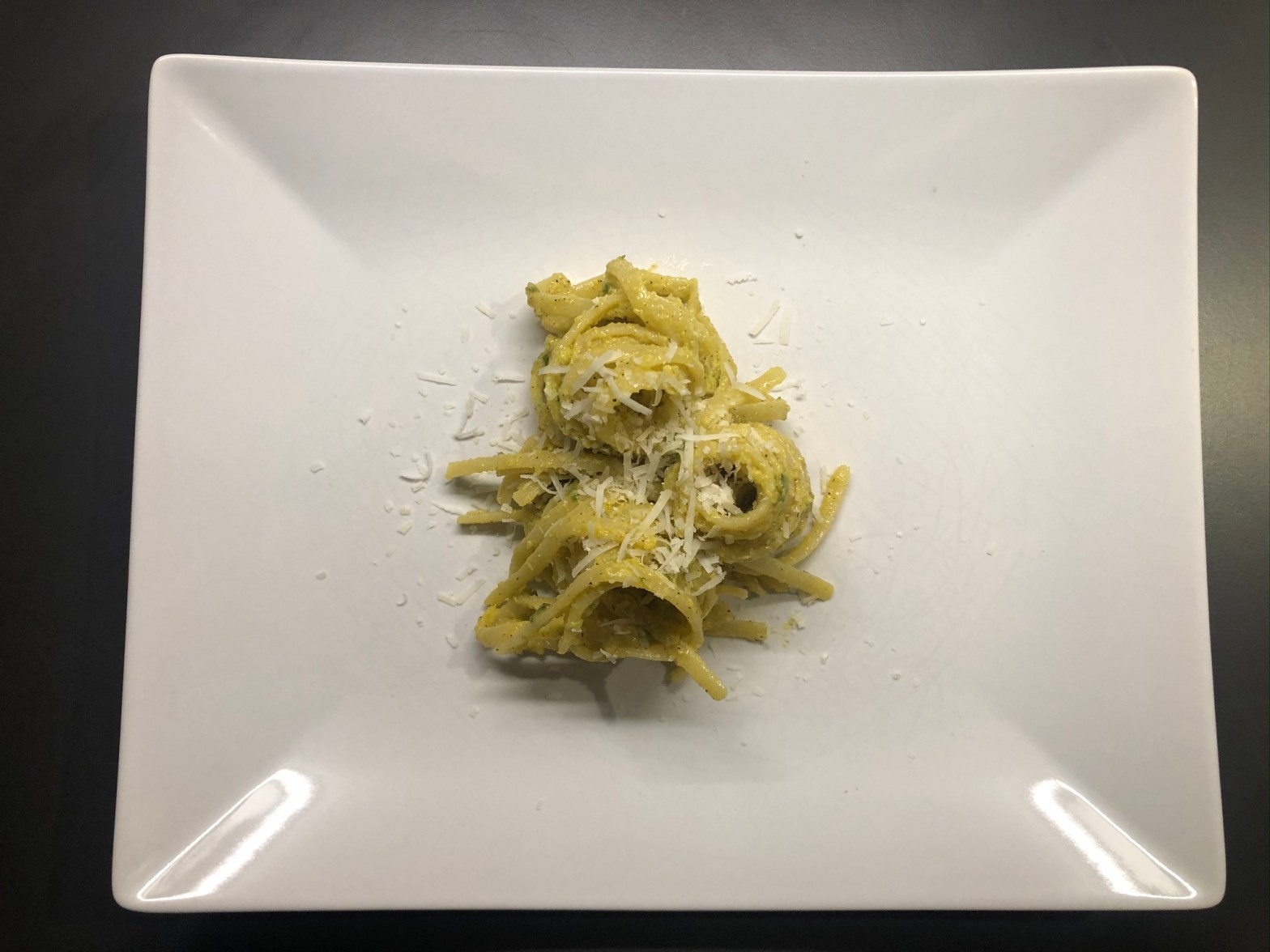
(German version below)
There’s an easy way to frighten just about any Italian. You just have to tell that in Germany a carbonara basically means a ham and cream sauce. The reaction to this is most: “No! No, no … ‘followed by expressions I do not want to write here.
Why is that?
On the one hand, I have generally noticed no pasta here in Italy, which is prepared with cream. For the rather light Italian cuisine, cream is usually perceived as too heavy. Except incredibly tasty desserts.
On the other hand, an original carbonara just has nothing to do with what one has made of it in Germany.
The original is made from bacon, mostly guanciale or pancetta, eggs, pecorino and / or parmigiano and pepper. Cream or even white wine you are looking for in vain.
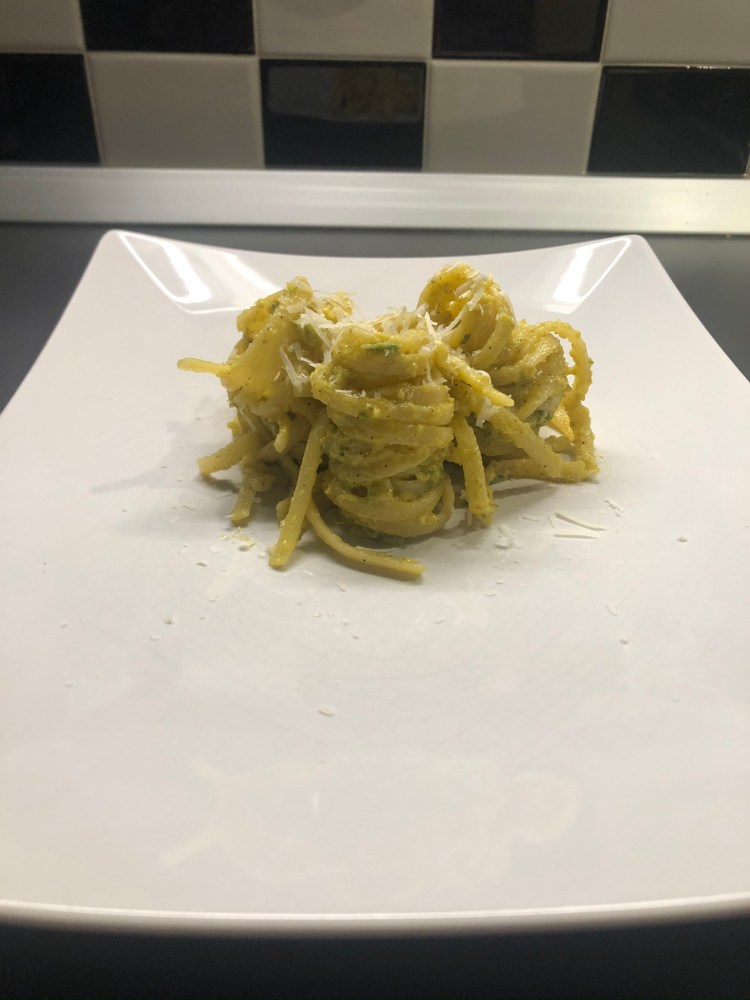
However, today was washing day for me and my entire apartment is full of freshly washed clothes to dry. If I had fried the bacon for a long time I could wash everything again. So I decided on a vegetarian option by simply replacing the bacon with fresh zucchini from the market.
The ingredients for two servings are:
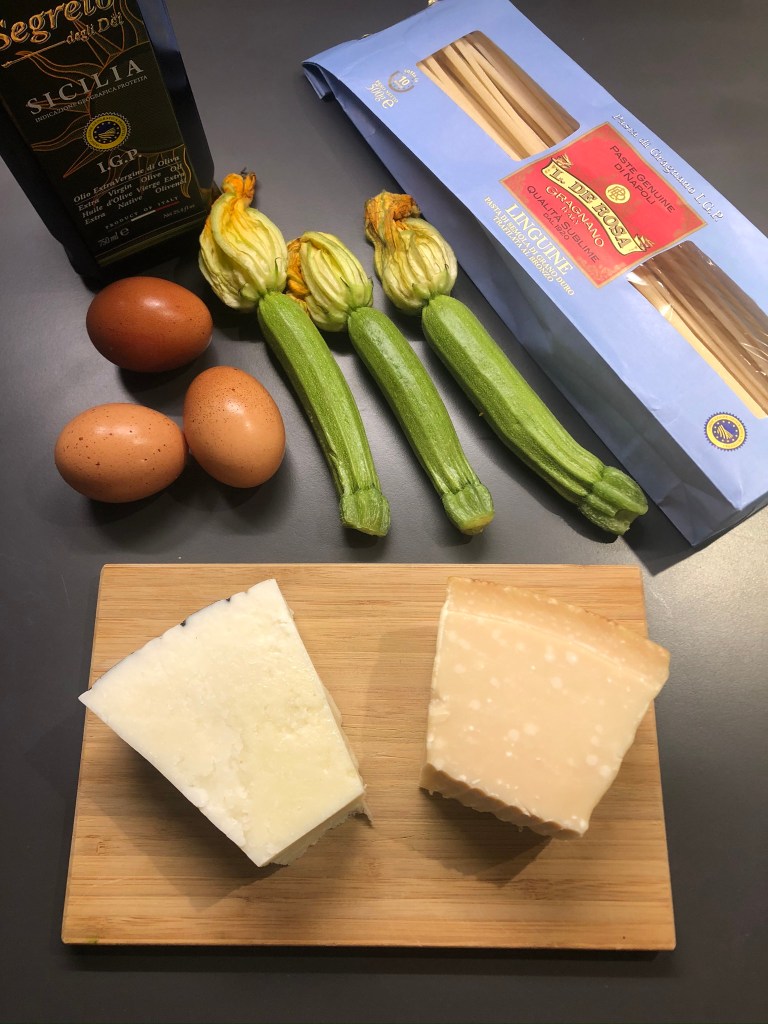
- 200 g Pasta
- 1 egg
- 2 egg yolks
- 20 g of Pecorino
- 20 g of Parmigiano
- 3 small zucchini
- pepper
- olive oil
Cooking the original, only Pecorino is used, but I like to mix it half in half with Parmigiano. The 20 g per cheese are almost too much here and it depends on how long matured and strong in taste of the cheese is already used. There is a simple rule for the amount of eggs. One egg yolk per person and in addition one whole egg per 2 persons.
Whether you use the carbonara with bacon or how I cook with zucchini today, the procedure always remains the same:
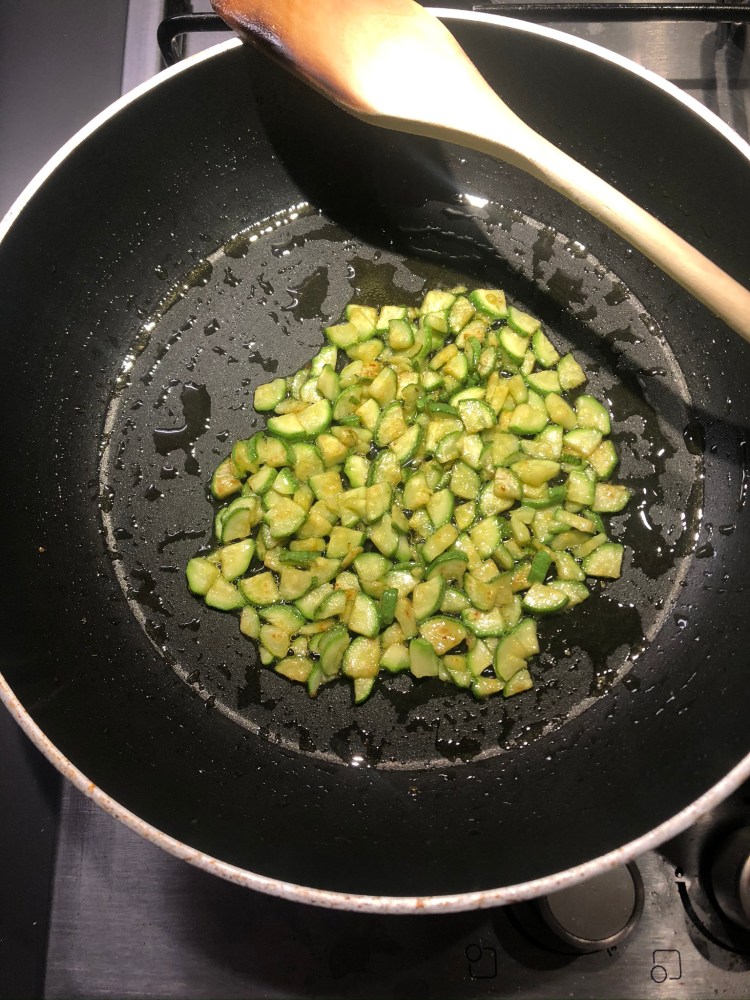
- First, the bacon or zucchini is cut into small pieces and slowly poured into the pan in a little olive oil on a low flame.
- It is only important to take your time.
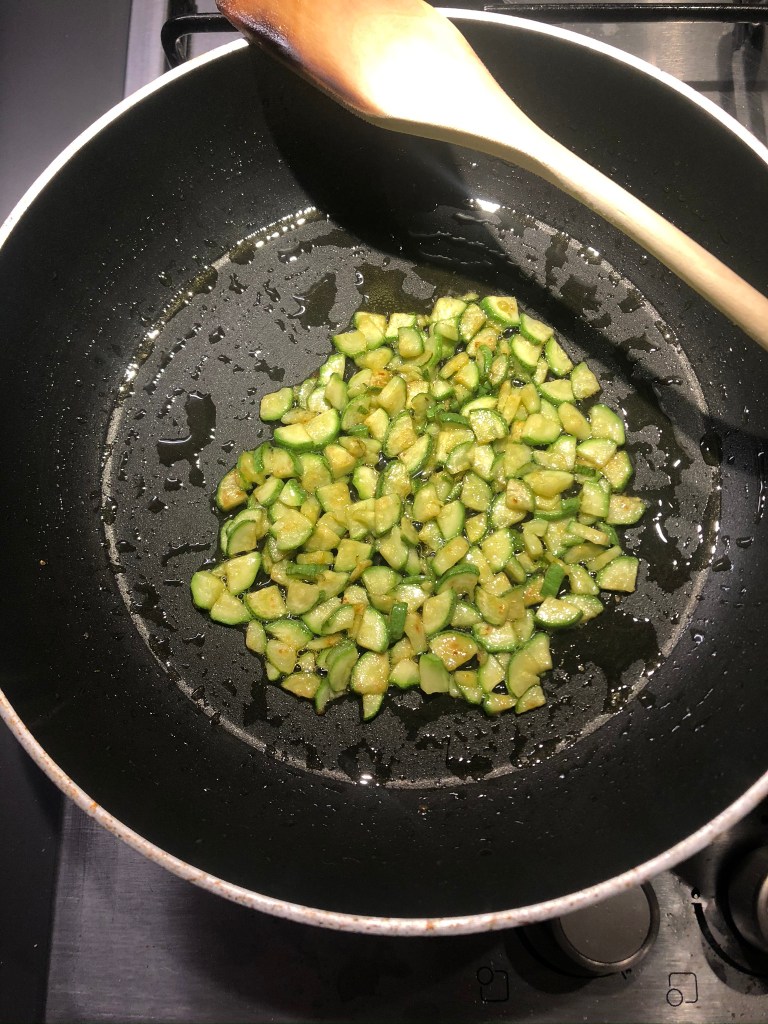
- If the bacon or zucchini is sizzling, a pot of water – 1 liter per 100 g of pasta – can be boiled up.
- In the meantime, grate the cheese as finely as possible and mix with the egg yolk, the eggs and pepper to a slightly thicker mass. Then put aside.
- When the water begins to boil put 10 g of salt per 100 g of pasta in and as soon as it is cooked again, add the pasta.
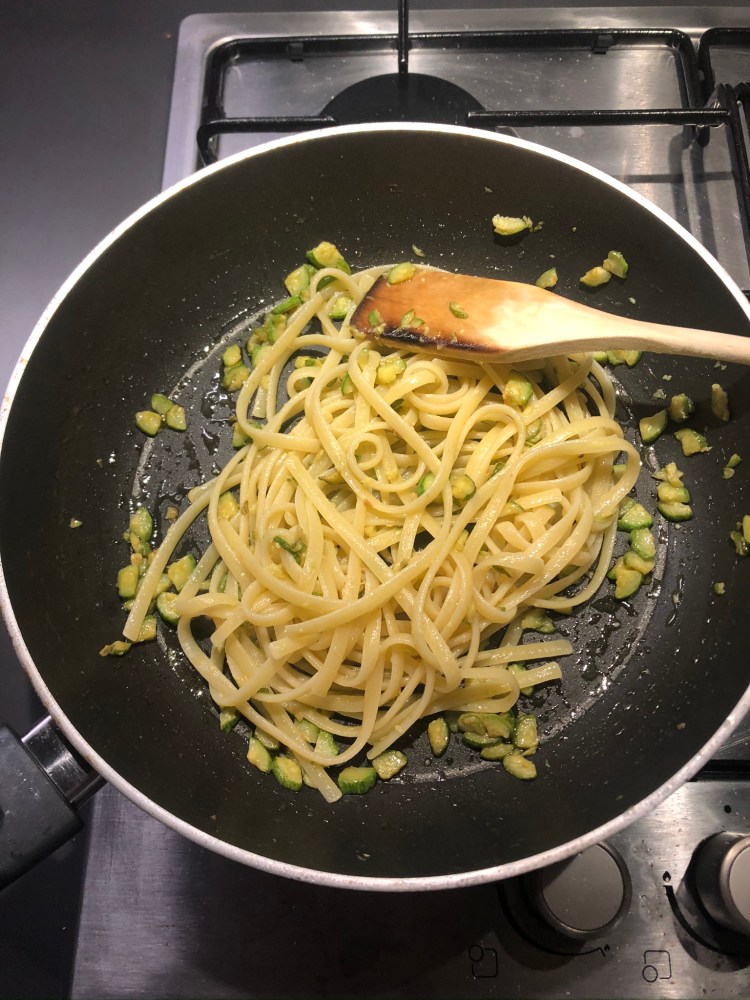
- Once the pasta is al dente, drain and add to the bacon or zucchini in the pan and stir a couple of times.
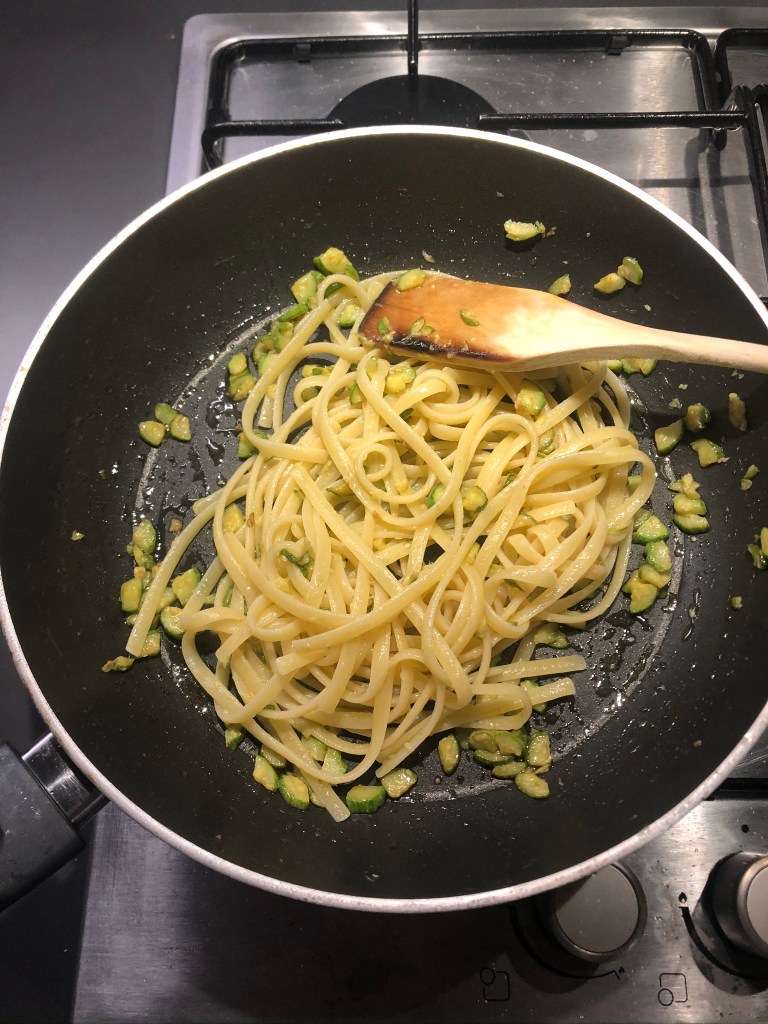
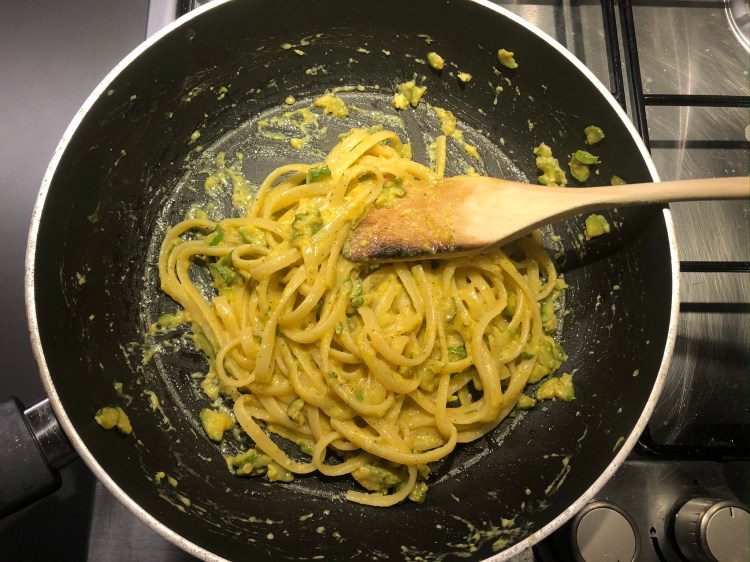
- Then extinguish the flame or remove the pan from the heat and pour the egg-cheese mixture over it and stir well in the still-warm pan until a creamy sauce has formed.
The egg should not be sautéed but the consistency should be like a scrambled egg maybe even a little more fluidy.
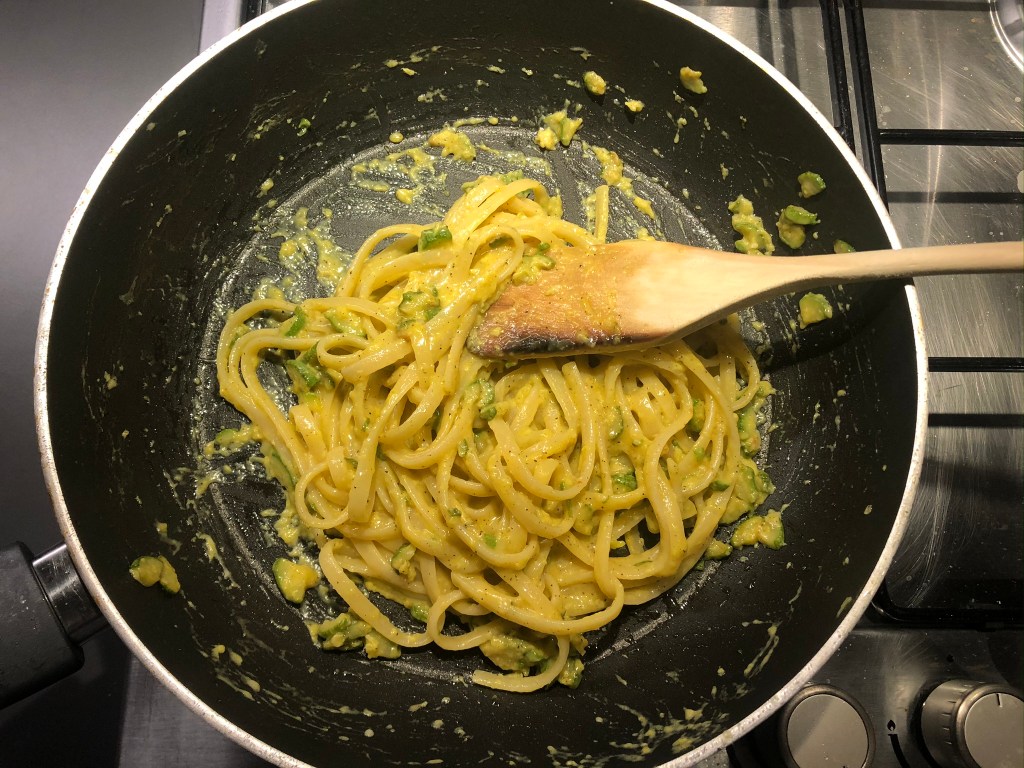
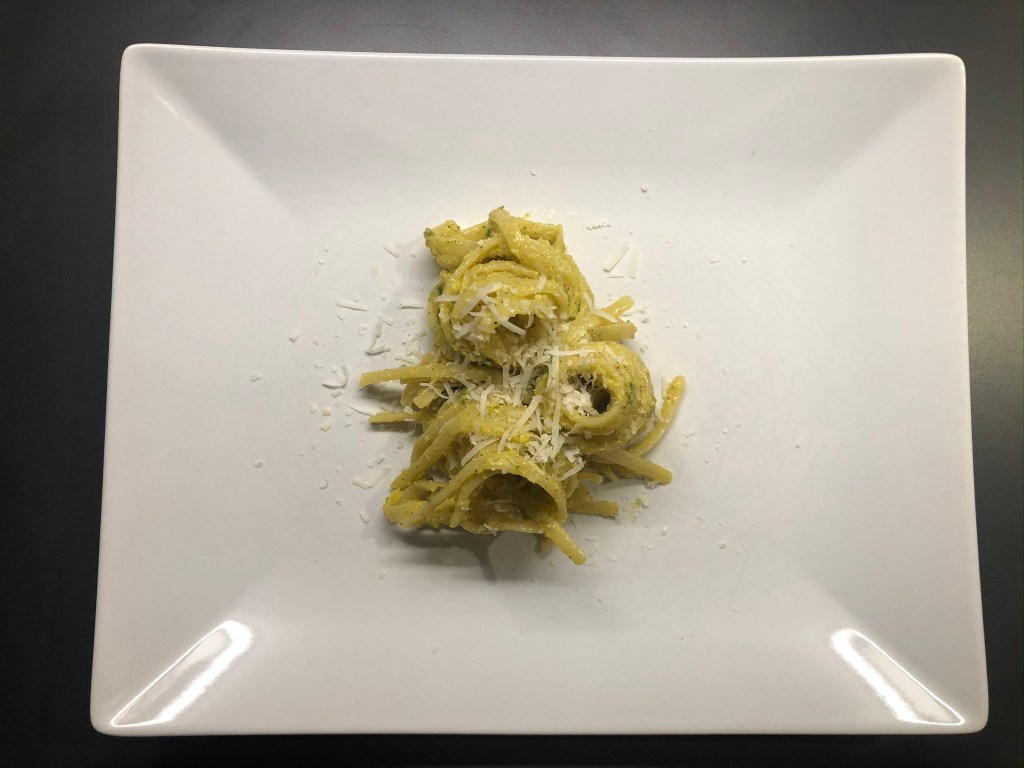
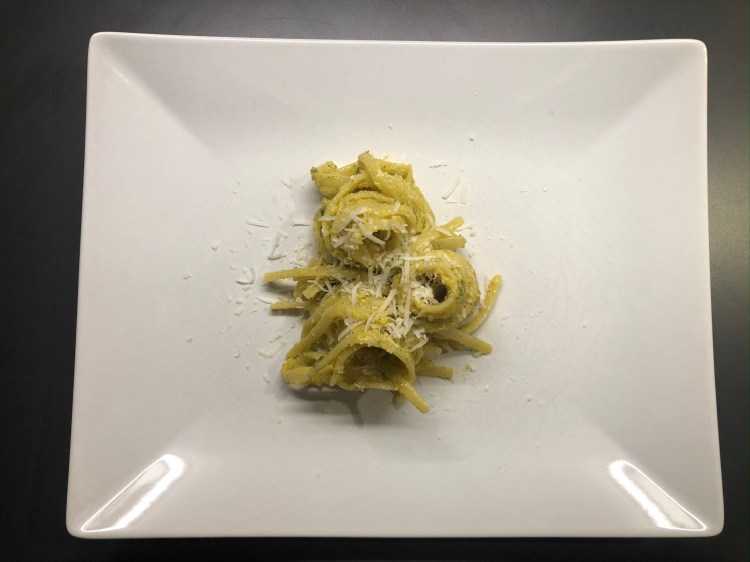
- Then just put the pasta on a plate and sprinkle with some grated Pecorino or Parmigiano and serve.
I admit, when I am in Germany I like to eat pasta with ham and cream sauce. I’ve always liked that. It just did not deserve the name Carbonara.
In terms of taste, you can not really compare the original Italian and German variants. They are too different for that. Personally, both of them tastes good, although here I have to admit that a few weeks ago I was invited to dinner with a friend when she cooked an original carbonara with Guanciale. For that one, I would put away every ham and cream sauce I’ve eaten in my life. So therefore, if I have the choice, then the original from Italy.
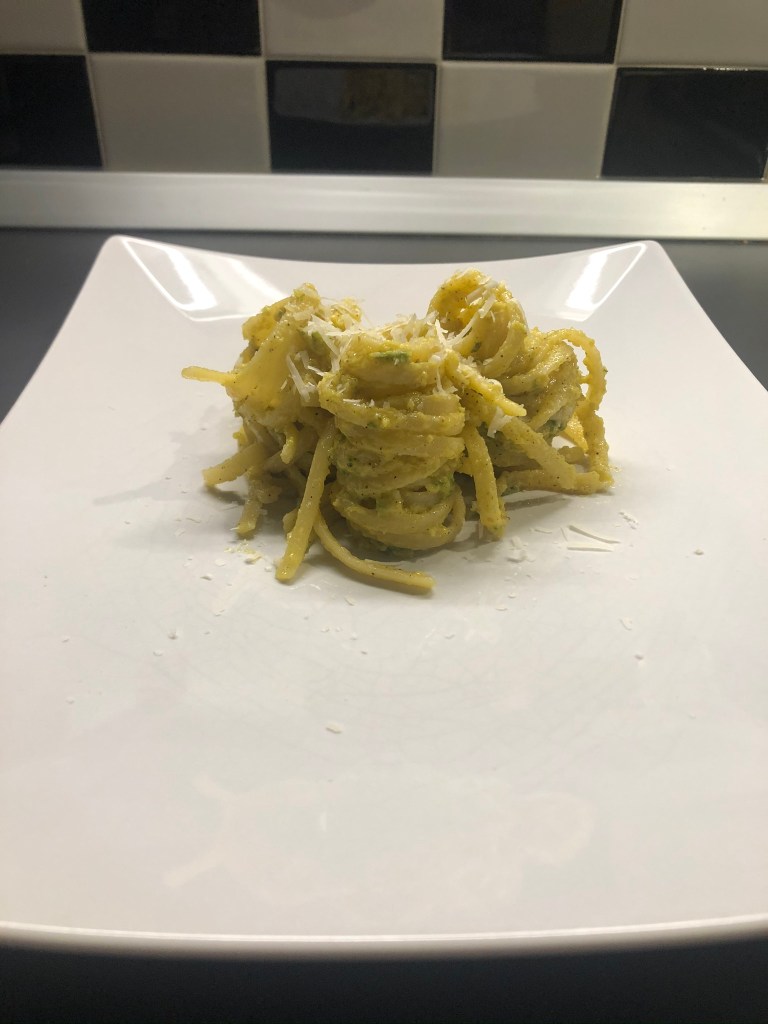
Carbonara di Zucchine
Es gibt eine einfache Möglichkeit so ziemlich jeden Italiener in Schrecken zu versetzen. Man muss nur erzählen, dass man in Deutschland unter einer Carbonara im Prinzip eine Schinken-Sahne-Soße versteht. Die Reaktion darauf ist meisten ein: ,No! No, no…‘ gefolgt von ausdrücken die ich nicht hier schreiben will.
Warum ist das so?
Einerseits ist mir generell noch keine Pasta hier in Italien aufgefallen, die mit Sahne zubereitet wird. Für die eher leichte italienische Küche wird Sahne meist als zu schwer empfunden. Unglaublich leckere Nachspeisen mal ausgenommen.
Andererseits hat eine originale Carbonara einfach nichts mit dem zu tun, was man in Deutschland daraus gemacht hat.
Das Original besteht aus Speck, meistens Guanciale oder Pancetta, Eiern, Pecorino und/oder Parmigiano und Pfeffer. Sahne oder gar Weißwein sucht man da vergeblich.
Allerdings war bei mir heute Waschtag und meine gesamte Wohnung hängt voll mit frisch gewaschenen Kleidern zum Trocknen. Hätte ich dar über lange Zeit den Speck gebraten könnte ich alles nochmal waschen. Also habe ich mich für eine vegetarische Variante entschieden indem ich einfach den Speck durch frische Zucchini vom Markt ersetzt habe.
Die Zutaten für zwei Portionen sind:
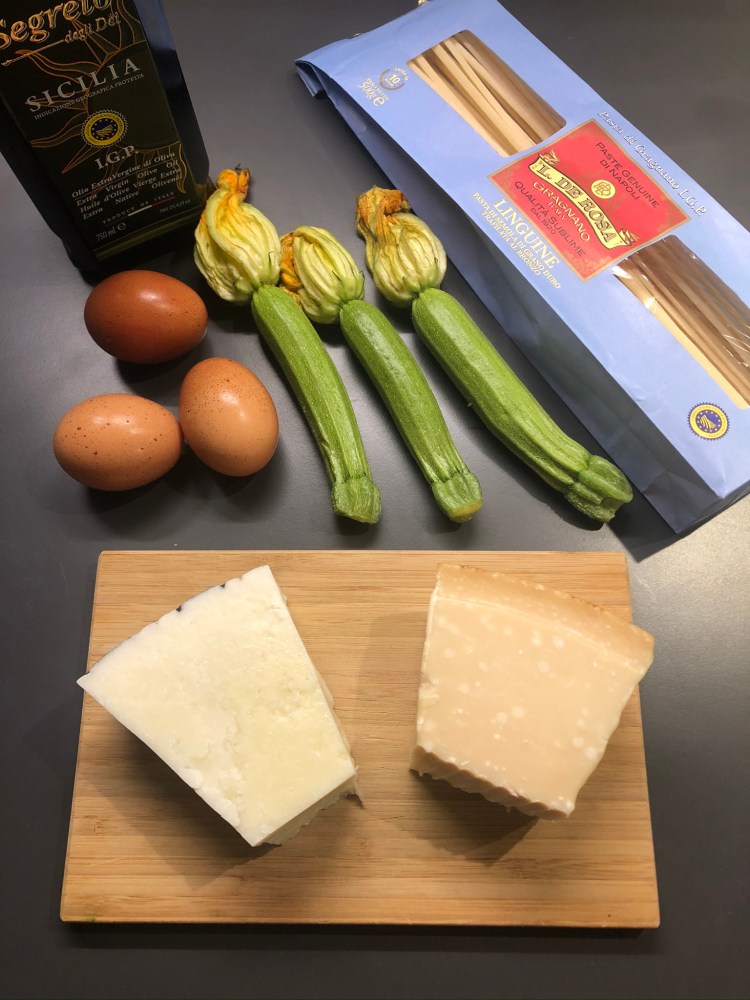
- 200 g Pasta
- 1 Ei
- 2 Eigelb
- 20 g Pecorino
- 20 g Parmigiano
- 3 kleine Zucchini
- Pfeffer
- Olivenöl
Das Original sieht eigentlich nur Pecorino vor aber ich mische ganz gerne noch zur Hälfte Parmigiano drunter. Die 20 g pro Käse sind hier schon fast etwas zu viel und es hängt auch davon ab wie lange gereift und kräftig im Geschmack der Käse schon ist den man verwendet. Für die Menge der Eier gibt es eine einfache Regel. Pro Person ein Eigelb und pro 2 Personen noch zusätzlich ein ganzes Ei.
Egal ob man die Carbonara mit Speck oder wie ich heute mit Zucchini kocht, das Vorgehen bleibt immer gleich:
- Zuerst wird der Speck oder die Zucchini klein geschnitten und in etwas Olivenöl auf kleiner Flamme langsam in der Pfanne ausgelassen. Hierbei ist nur wichtig sich Zeit zu lassen.
- Wenn der Speck oder die Zucchini am Brutzeln sind kann ein Topf mit Wasser – 1 l pro 100 g Pasta – für die Pasta aufgesetzt werden.
- In der Zwischenzeit den Käse möglichst fein reiben und mit den Eigelb, den Eiern und Pfeffer verrühren bis eine etwas dickerer Masse entsteht. Dann erst einmal bei Seite stellen.
- Wenn das Wasser anfängt zu Kochen mit 10 g Salz pro 100 g Pasta salzen und sobald es wieder Kocht die Pasta dazu geben.
- Sobald die Pasta al dente ist, abgießen und zu dem Speck oder den Zucchini in die Pfanne geben und ein paarmal umrühren.
- Danach die Flamme löschen bzw. die Pfanne vom Herd nehmen und die Ei-Käse-Masse darüber gießen und in der noch warmen Pfanne mehrmals gut umrühren bis eine cremige Soße entstanden ist. Das Ei soll dabei nicht angebraten werden sondern von der Konsistenz her etwa wie ein Rührei oder noch etwas flüssiger bleiben.
- Danach nur noch auf einen Teller und mit etwas geriebenen Pecorino oder Parmigiano bestreuen und servieren.
Ich gebe zu, wenn ich in Deutschland bin esse ich gerne Pasta mit Schinkel-Sahne-Soße. Das hat mir schon immer geschmeckt. Es hat nur eben nicht den Namen Carbonara verdient.
Geschmacklich kann man die original italienische und deutsche Variante eigentlich nicht vergleichen. Dafür sind sie zu verschieden. Mir persönlich schmecken sie beide, wobei ich auch hier zugeben muss, dass ich vor ein paar Wochen bei einer Freundin zum Essen eingeladen war als sie eine originale Carbonara mit Guanciale gekocht hat. Dafür würde ich jede Schinken-Sahne-Soße die ich bisher gegessen habe ohne zu zögern stehen lassen. Also von daher, wenn ich die Wahl habe, dann das Original aus Italien.


One thought on “Carbonara di Zucchine”