Who am I and why am I writing a blog? The one I can not really answer, the other I do not really want to answer. I was born and raised in Germany. As a little boy I liked Italian cars – sure!
I became older and adult – the latter at least a bit – and at some point I started to like Italian food as well. To be honest, I generally like good food. The entire Mediterranean cuisine, I like very much. However, my absolute favorite is by far the Italian cuisine.
Due to some unforeseen things, it has turned out that I live in Italy now. More precisely, in Tuscany. A few days ago I moved to my new apartment and the previous tenant left me a whole collection of Italian cookbooks.
Challenge accepted!
At the same time, I read an article about blogging, which is probably why I write this now. Maybe this blog serves me in the end only as a recipe collection.
Who knows?
So I’m curious if I have the stamina to cook through my new cookbooks and at the same time to write about it. At first the odds are good, because I like eating for my life. I live near the sea. Therefore, I have to do a lot of sports to keep my shape despite the food. So the odds for continuous writing are not that good.
And the worst, sometimes I even have to work!
Pasta alla puttanesca – Pasta by bitch style
What does the first dish on my blog say about me? Hopefully, only that sometimes I like to eat spicy and hot. This is also the only small criticism I have at the Italian kitchen. It is usually quite mild. Especially in the north where I live. The further south you go the more often you will find spicy dishes such as the much better known spaghetti all’arrabbiata or ‘nduja. Therefore, I was very happy to have found this dish and have only later in the research seen what puttanesca actually means.
As with most dishes, there are different legends where it comes from. Some date back to the mid-19th century where, depending on the source, brothel owners in Rome or Naples, they offered it to their customers.
Others indicate the origin on the island of Ischia and explain the name with the indiscriminate throwing together of ingredients that were just there and thus on a somewhat sloppy preparation.
The olives, capers, hot peppers and garlic taste very strong in this dish which is rare for the rather mild Italian cuisine. Typical, however, are the few and simple ingredients with which a very tasty tomato-based sauce is prepared which differs in taste clearly from others.
The ingredients for two servings are:
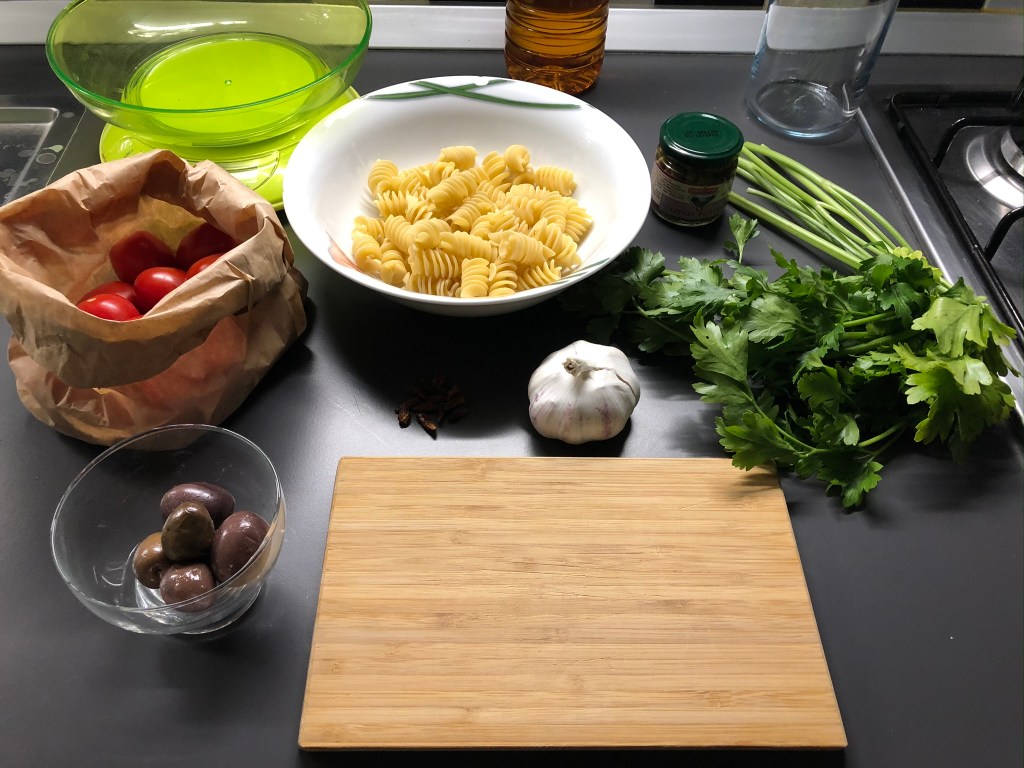
- 200 g Pasta
- 50 g Gaeta olives (black olives can also be used)
- 20 g capers
- 1 clove of garlic
- 400 g tomatos
- a few dried hot peppersparsley
- 2 – 3 tablespoons olive oil
- Pecorin (sheep’s milk cheese)
Anchovies are often added. Hence I’m not a friend of anchovies, I have left them away.
First, the tomatoes are peeled. I do not know if there are several procedures. I always cut them on one side and then drop them briefly into boiling water. After that, the skin can be easily removed.
As you can see in the pictures, I first chopped all the ingredients and prepared everything. This is a bit time consuming but then I have no hassle later. Maybe I can do that better someday but at the moment it is so much safer.
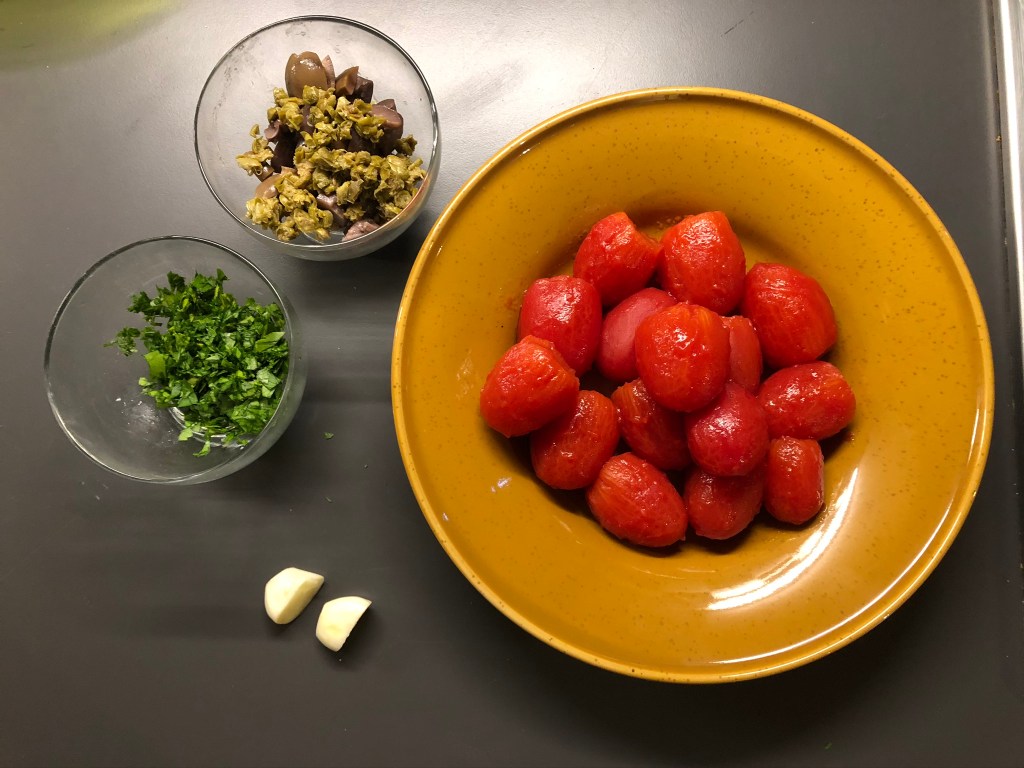
When everything was ready, I heated the olive oil in the pan and fry the garlic clove until light brown. Mostly of the garlic is taken out afterwards. In this dish, the garlic is often finely chopped and stays in the pan.
Then I added the tomatoes and slowly boiled them by medium heat. After about 10 minutes, I then put the finely chopped olives, capers and peppers and most of the parsley in the pan and simmer the whole thing on low heat for about 15 minutes.
At the same time, I brought the water for the pasta to boil. For every 100g of pasta, it should be 1 liter of water and 10g of salt. It is important to put the salt into the water after it is started boiling. After the pasta had done more than half the cooking time, I drained it and put it into the pan to the souce. During this time, the souce and the pasta in the pan must be stirred frequently so that nothing burns. In addition, from time to time, some of the boiling water of the pasta is added to the pan. The amount is hard to say, so that the souce does not burn but also not too liquid. The starch that has dissolved in it acts like a natural glue and ensures that the souce gets creamier and gets a nice consistency.
After the pasta in the pan finished or better became “al dente”, I have put it from the stove and on a plate. Finally, garnish with some pecorino and parsley. Here I made a small mistake. The pecorino I used was still very young and soft. According to the recipe I followed older Pecorino should be used. This is then firmer and tastes much stronger what better fits the generally strong taste of this dish better.
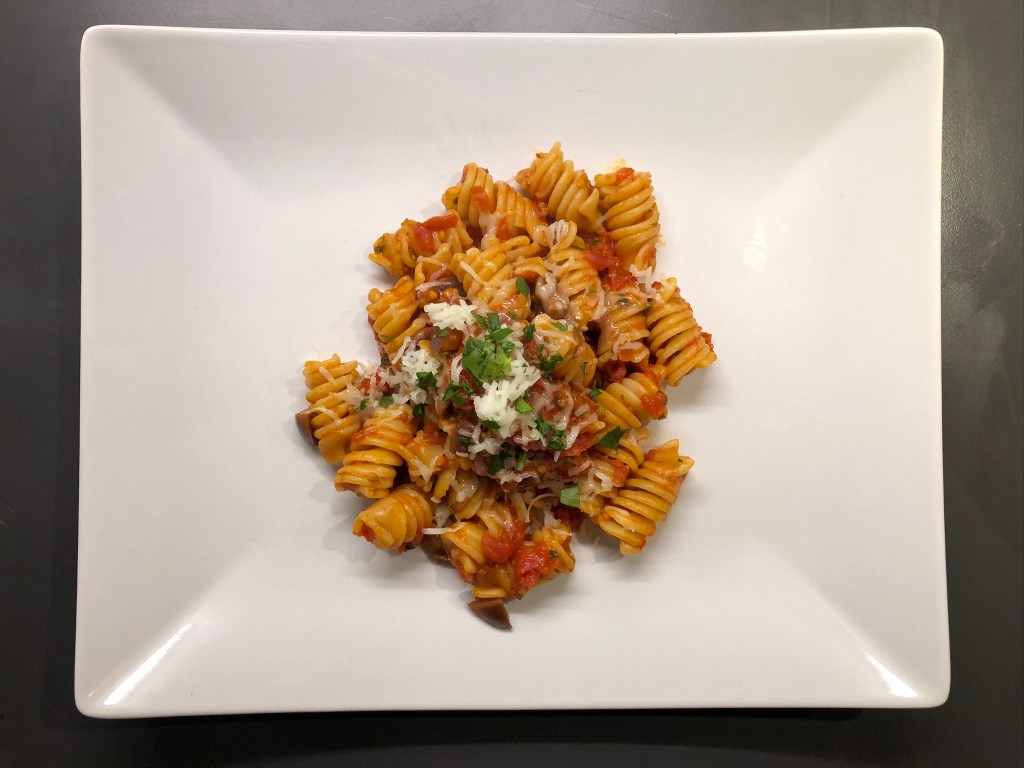
The olives and capers make it slightly sour and, together with the hot peppers, very spicy. There is a clear difference in taste to the pasta dishes on tomato basis I ate in the past. In any case, it was super delicious and I’m glad that my first attempt was successful right away.
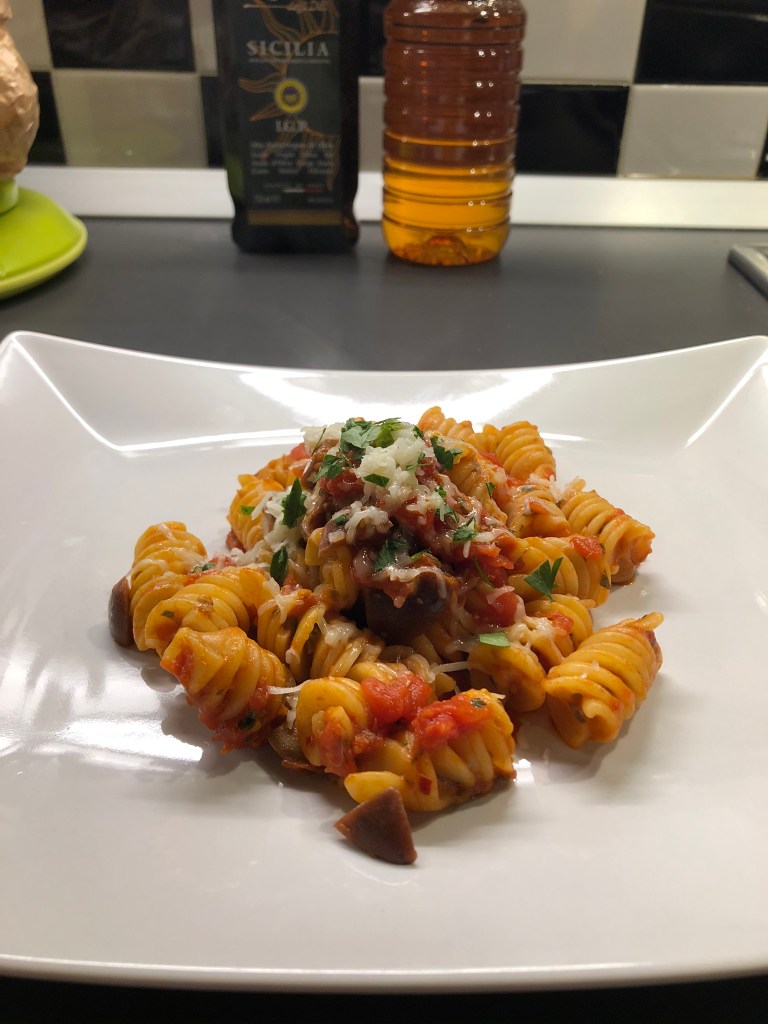
Another small note: to dishes that contain fish in Italy, they will not be eaten with cheese, as fish and cheese are considered inappropriate. Since I have refrained from the anchovies, but I may peacefully give the cheese over it.
Oh dear…writing this text took longer than cooking…

